WHO'S CHELSEA MANNING?, 2013
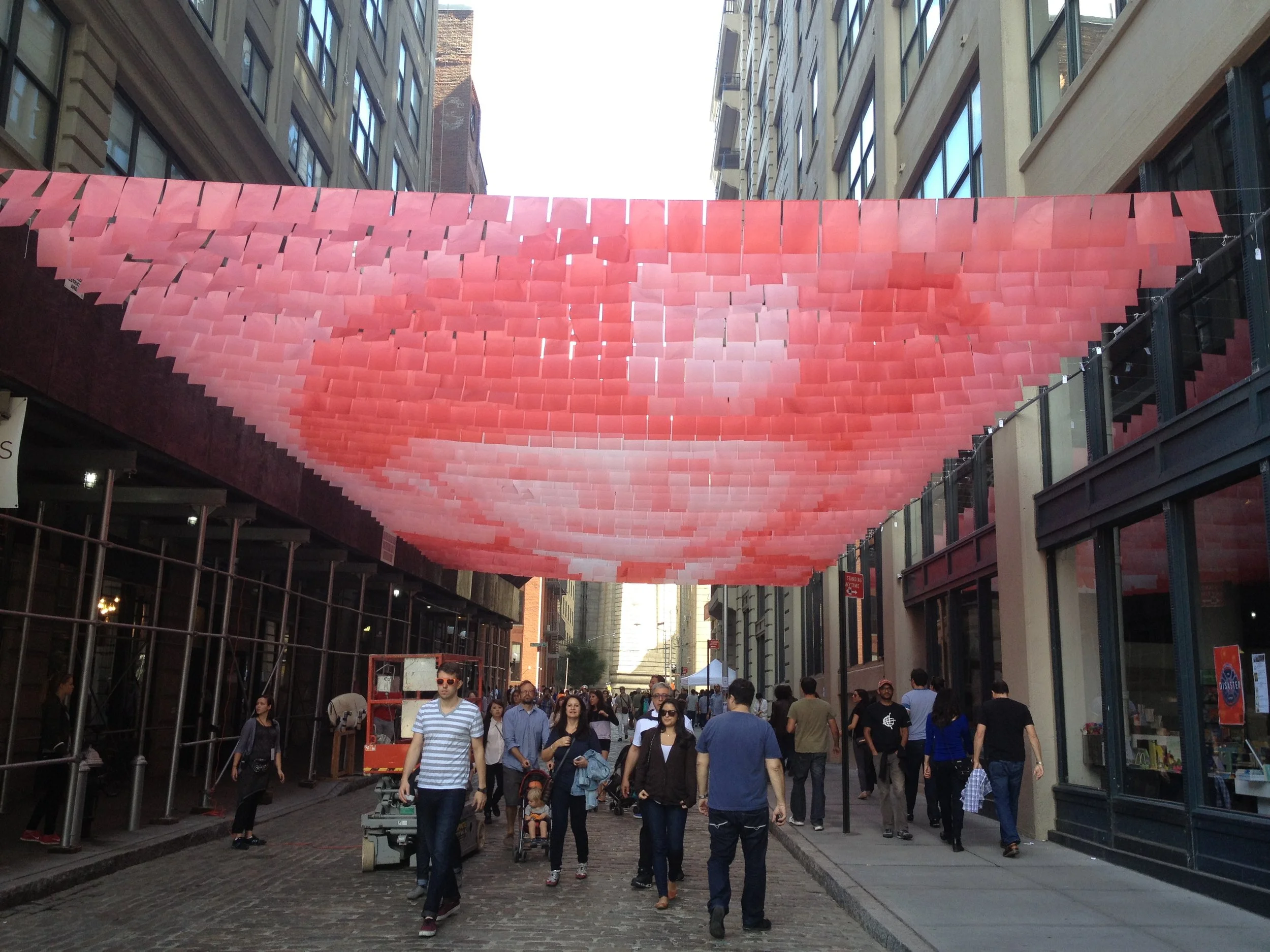
mix media, Installation size: 70' x 32'
DUMBO ARTS FESTIVAL: Friday September 27th – Sunday September 29th
Location: Water Street Btwn Main & Washington Streets, Brooklyn NY 11201
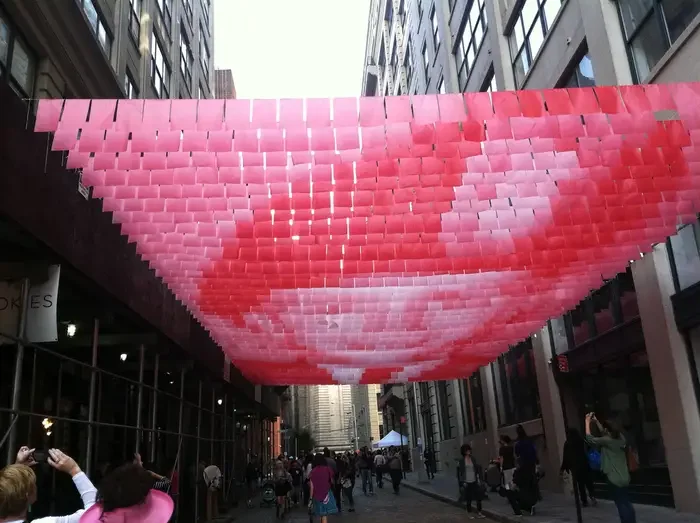
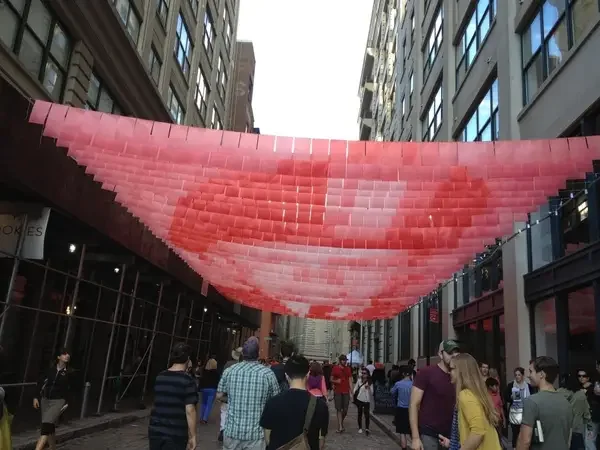
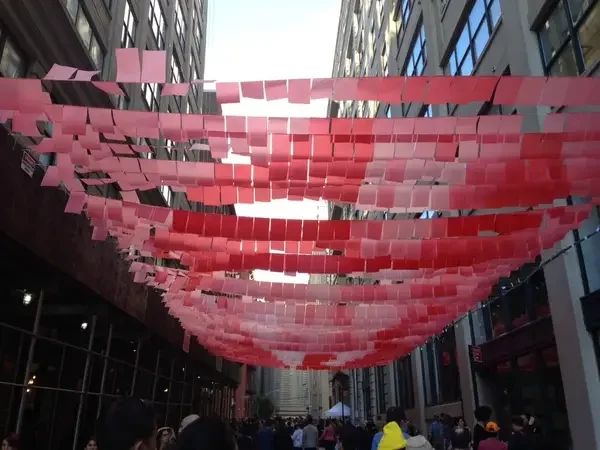
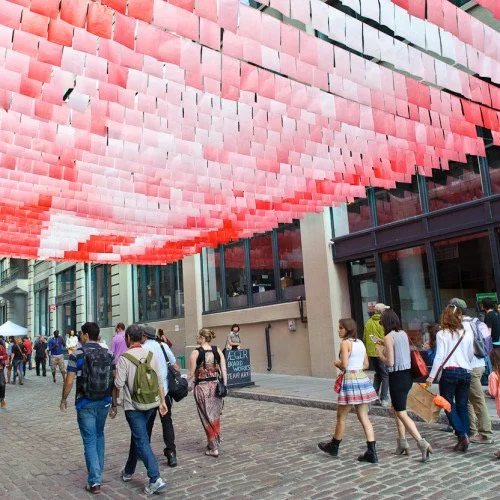
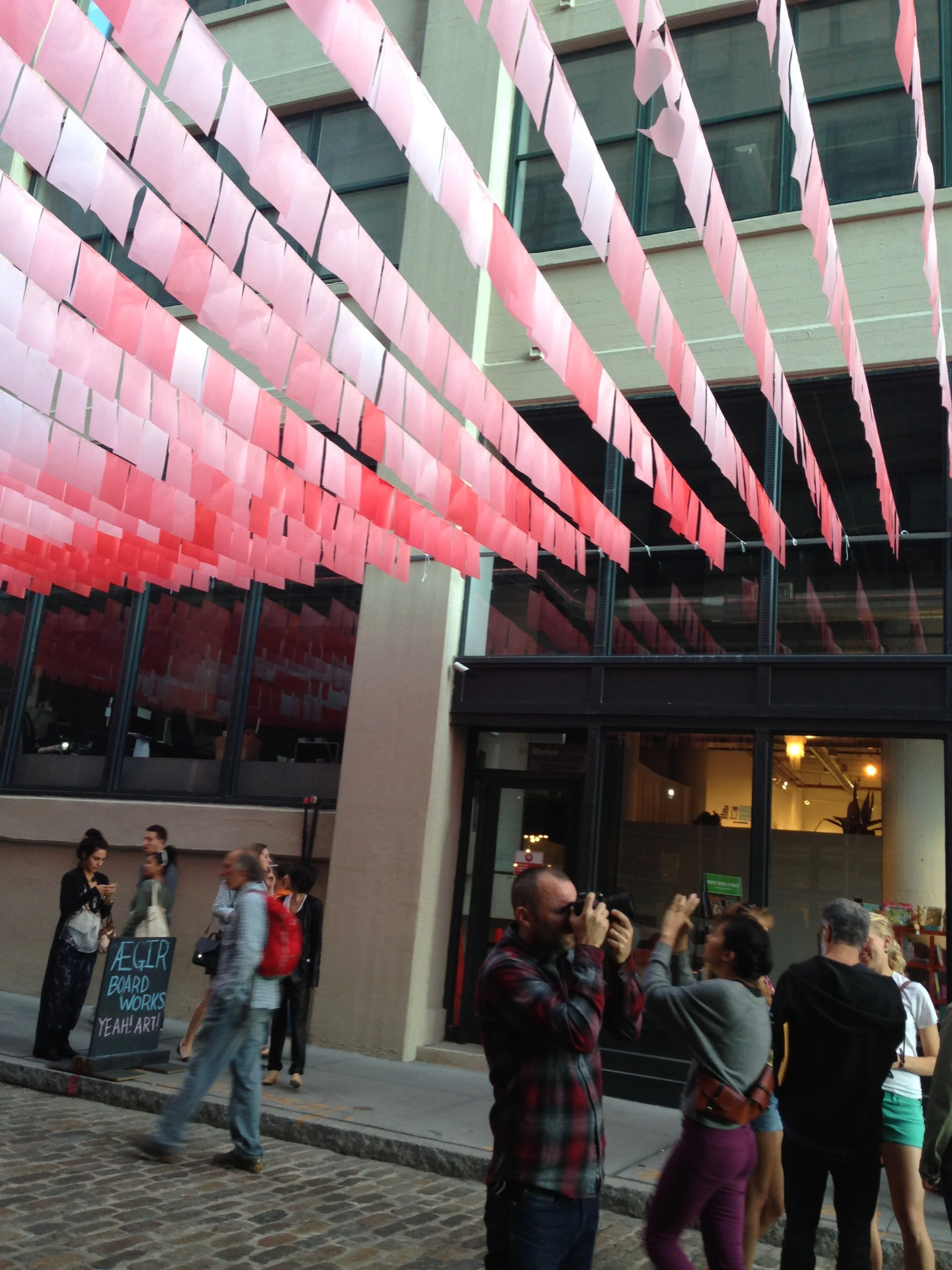
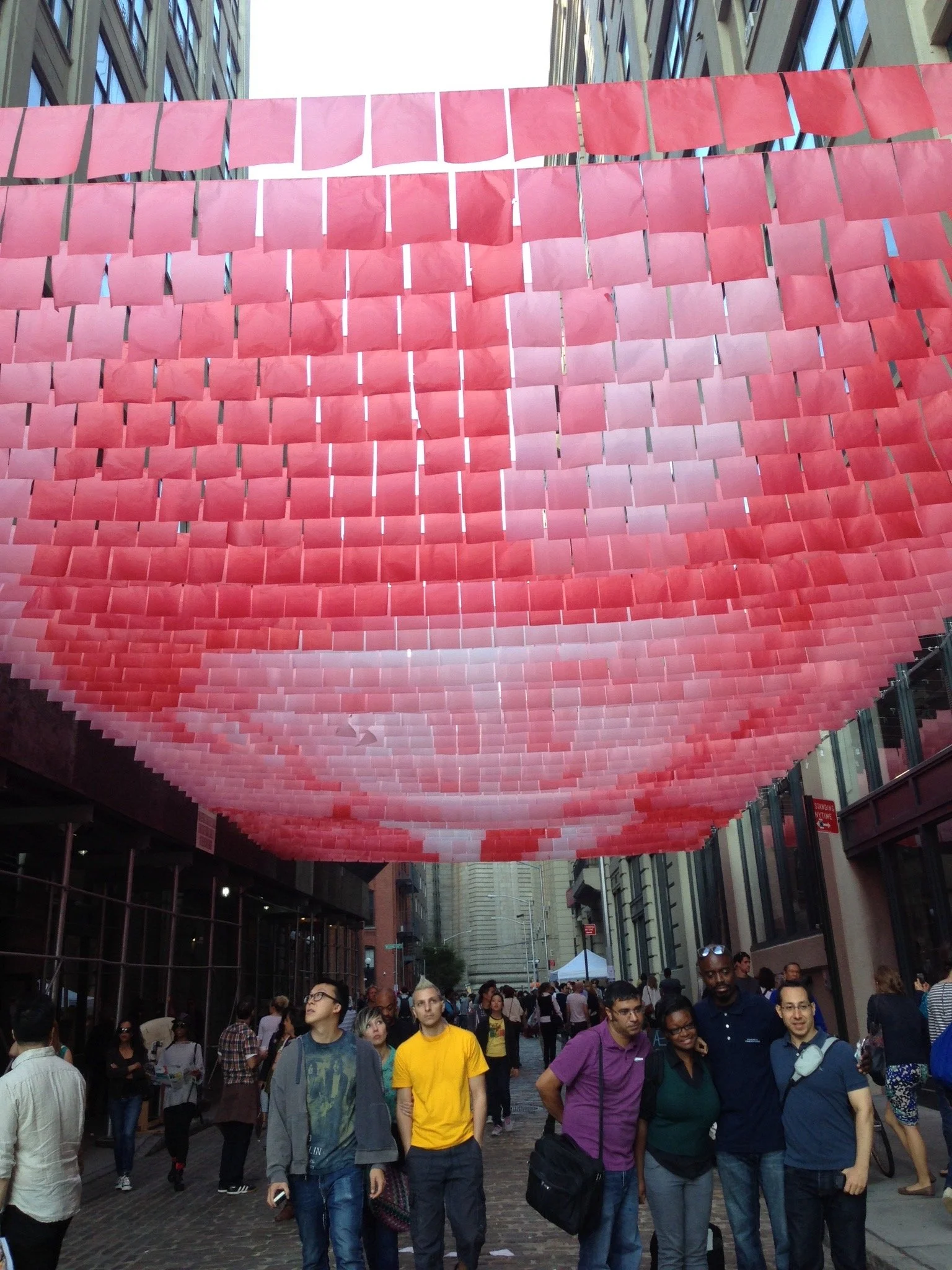
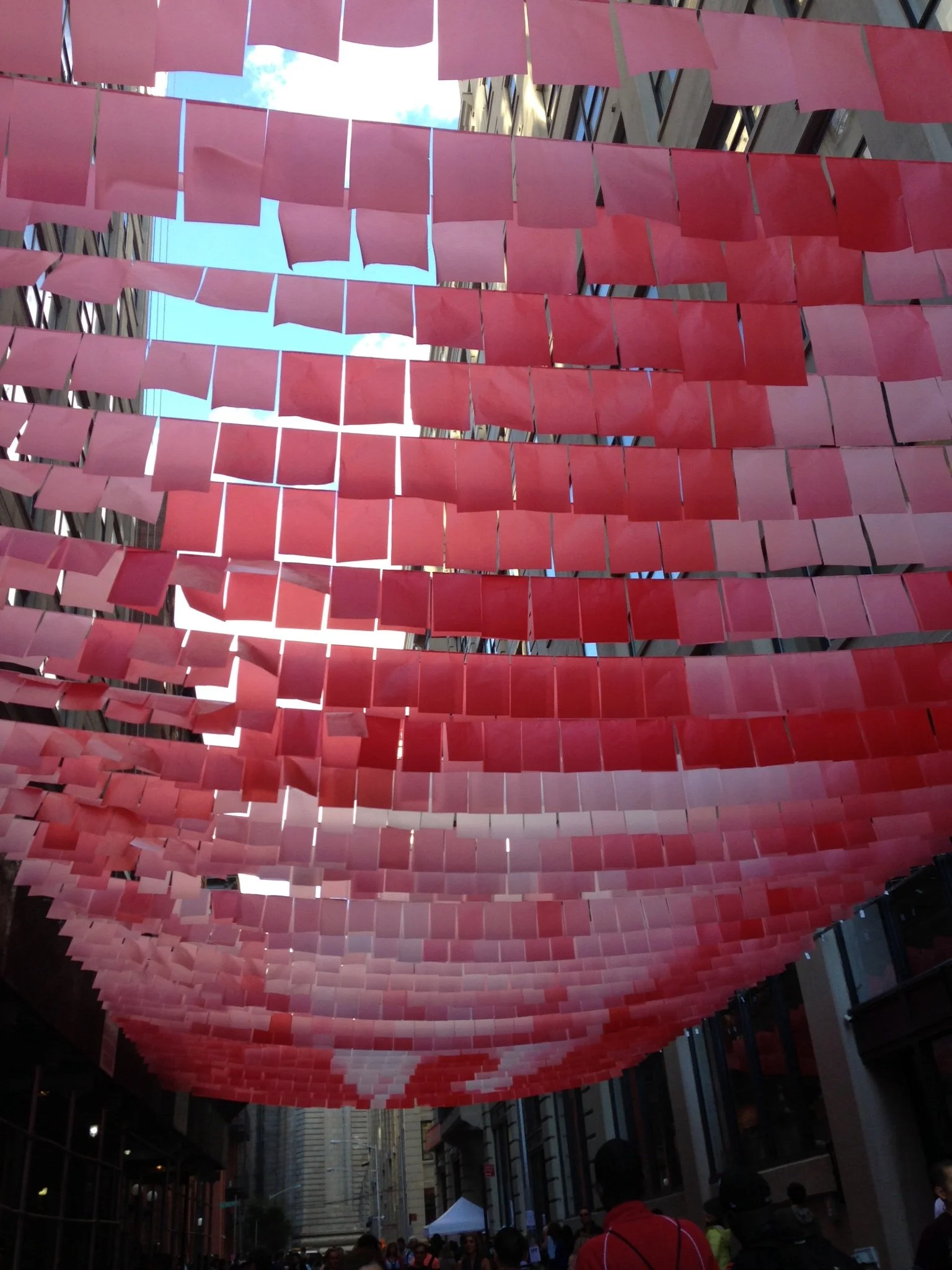
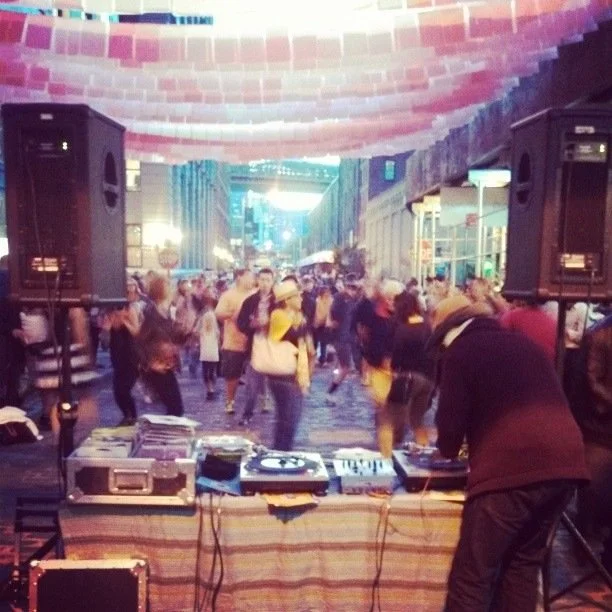
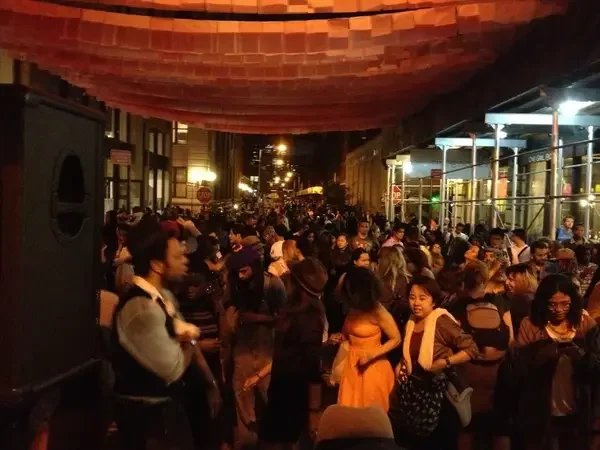
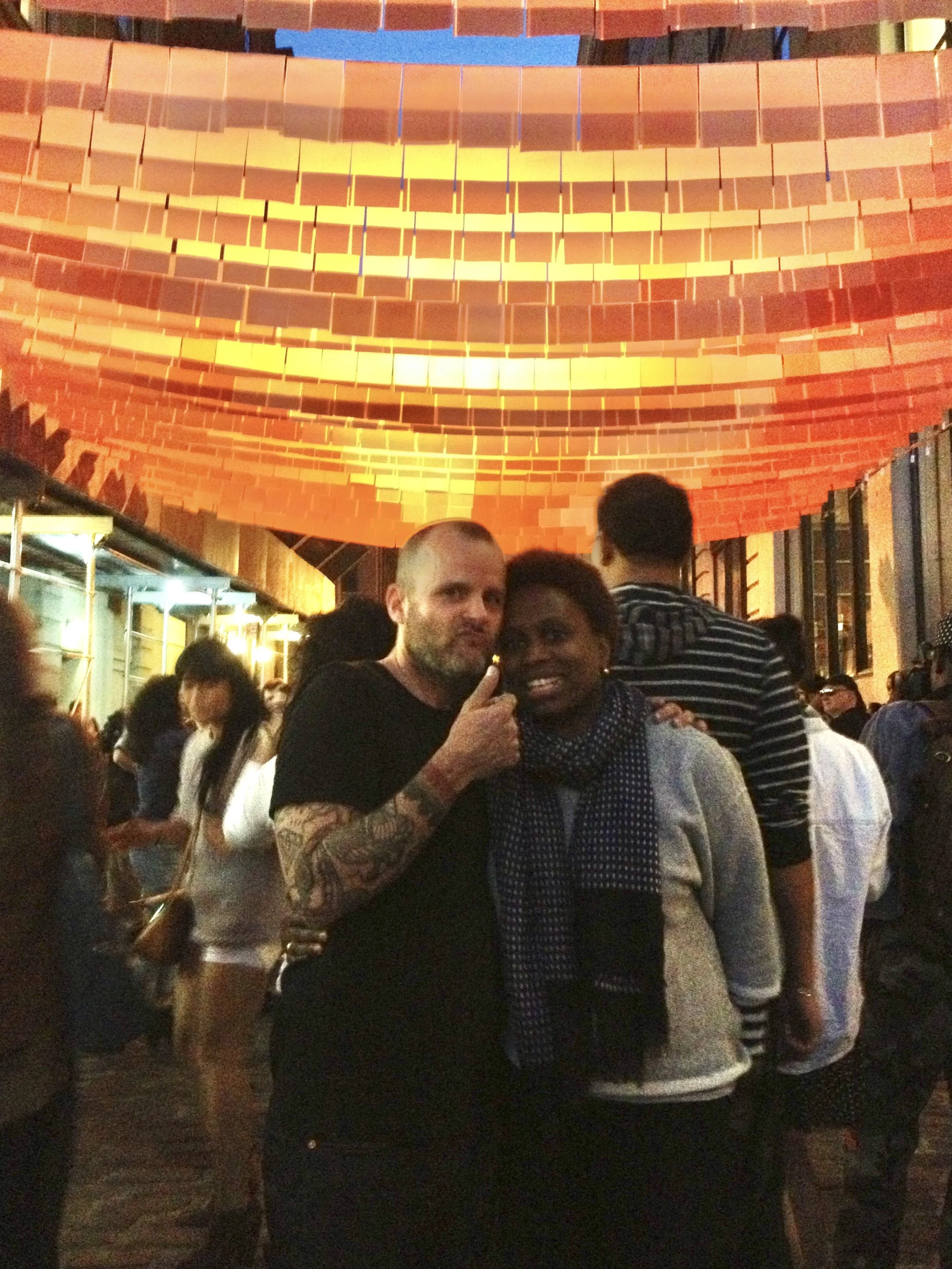
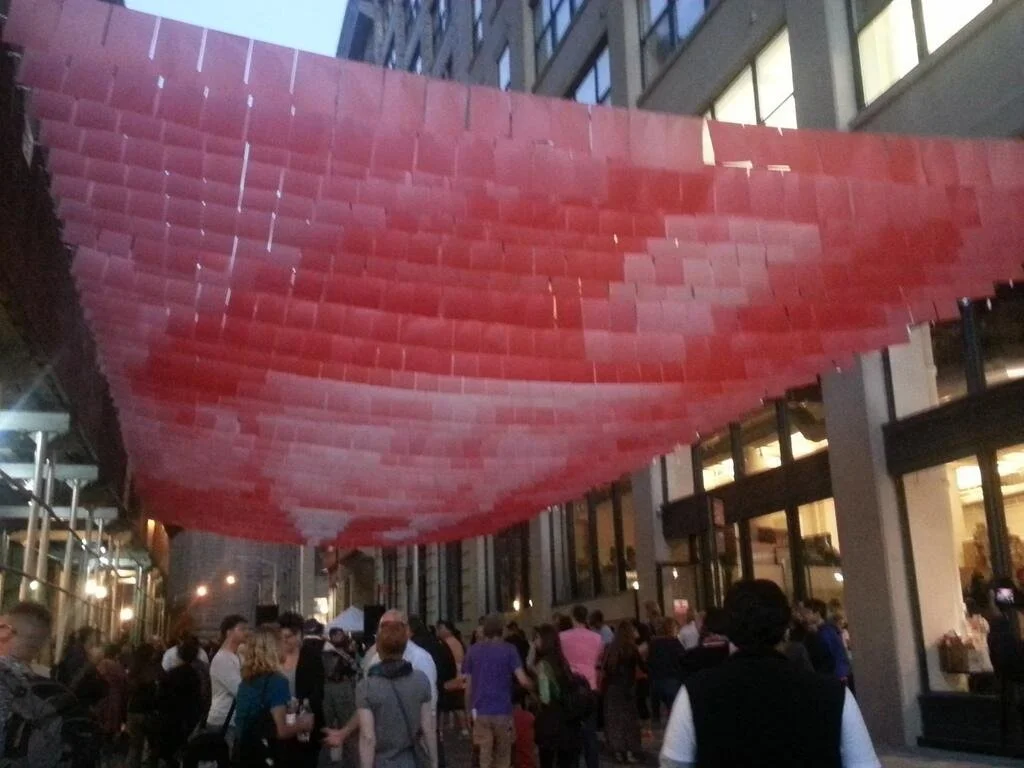
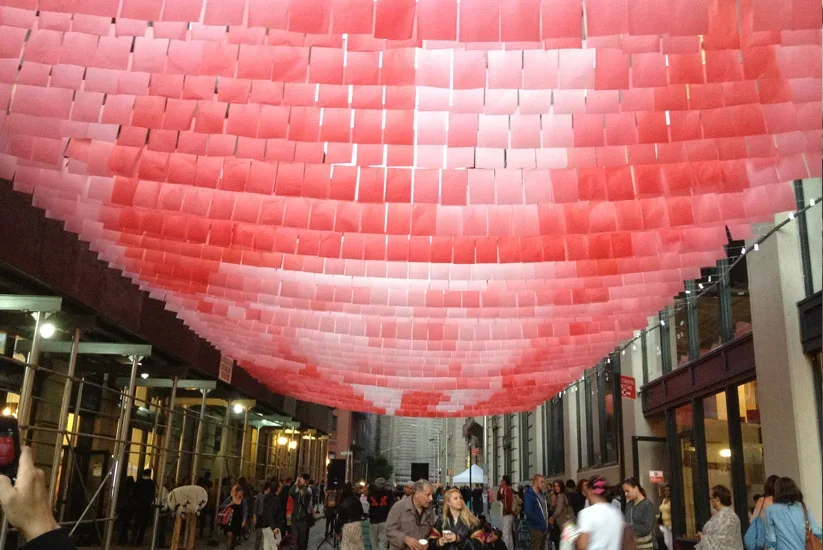
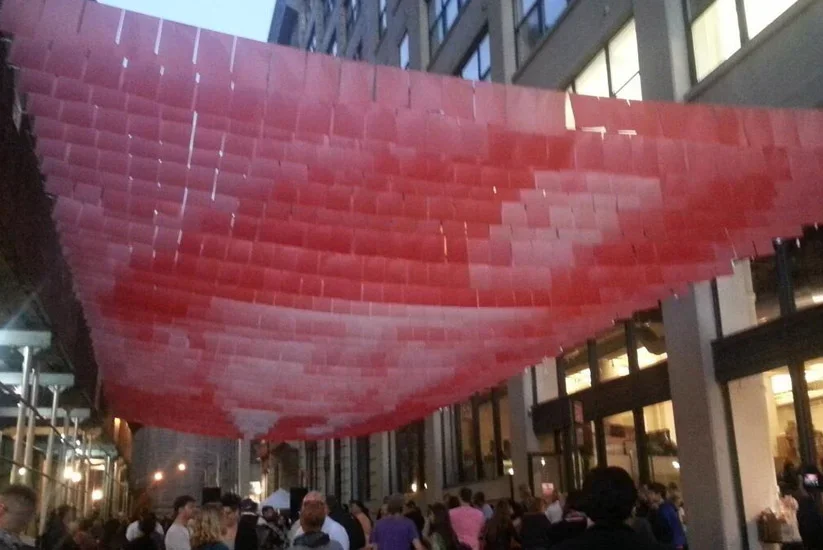
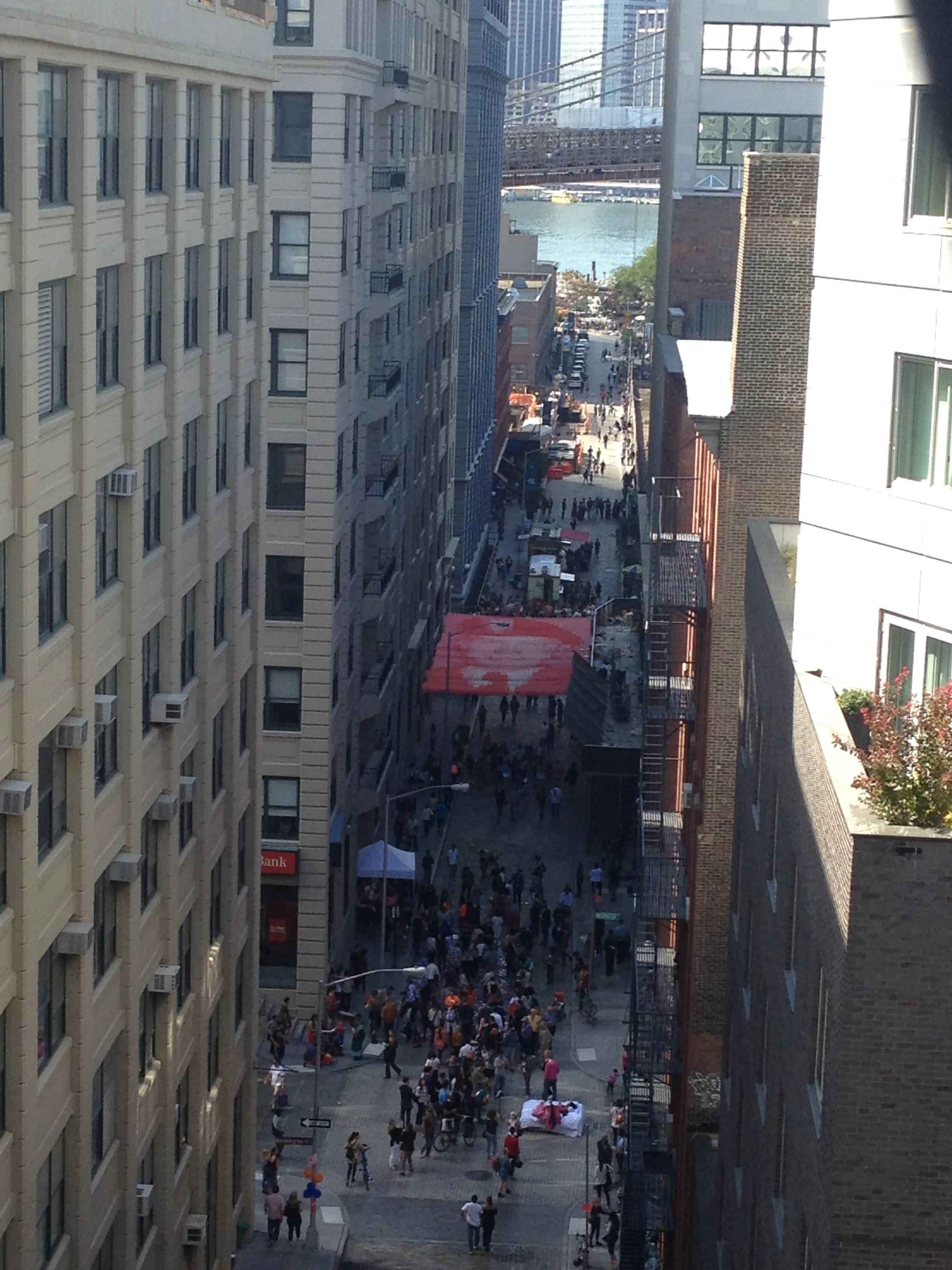
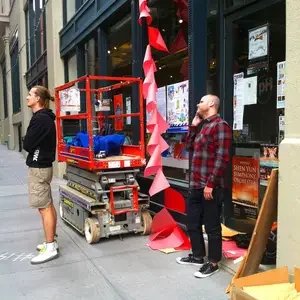
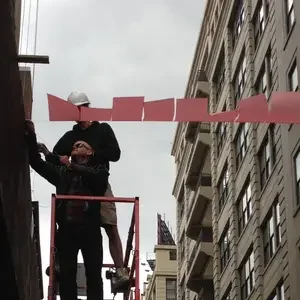
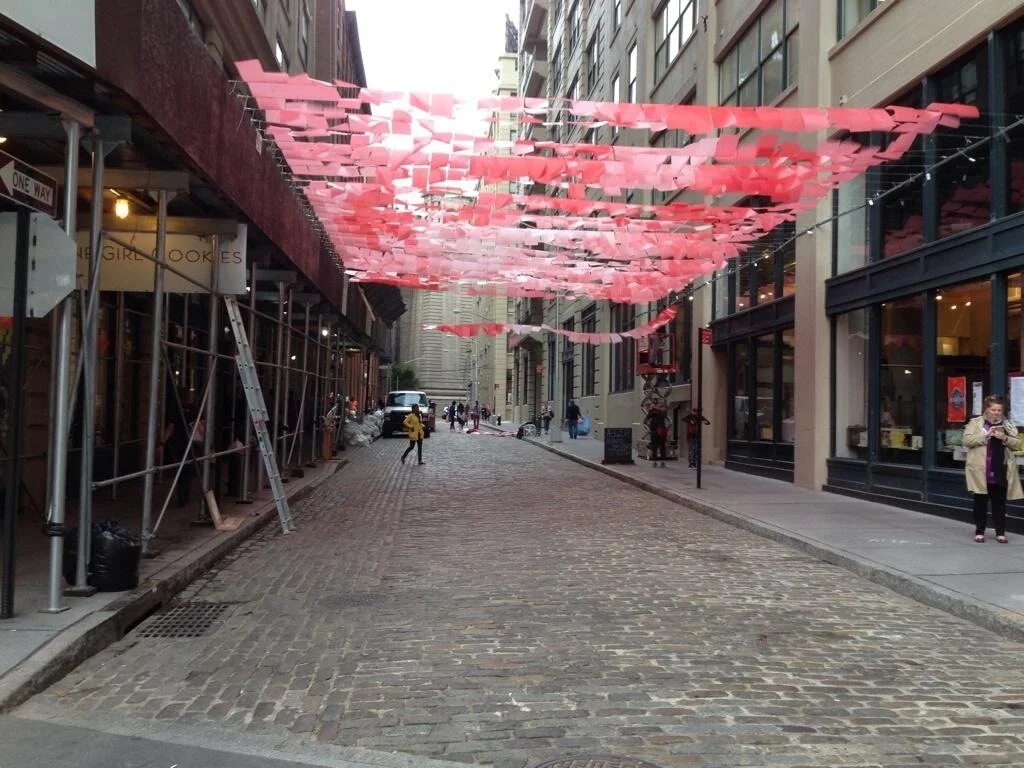
Using 1,600 transparent colored flags, in reference to the 1600 Pennsylvania Ave. White House address, to make up the installation "Who’s Chelsea Manning?". The installation will appear, from afar, as a mammoth pixelated image of that famous face and cap of Private Manning, hanging across Water Street as part of this year's DUMBO Arts Festival.
The 70-by-32-foot installation "Who’s Chelsea Manning?" at the DUMBO Arts Festival aims to replace the simplistic view of the 25-year-old Manning, sentenced to 35 years in prison for exposing some of the US government’s most extraordinary war crimes. Convicted of several counts of espionage, though cleared of “aiding the enemy,” Goen believes Manning is guilty of little more than informing the US population of the government’s illegal torture centers and civilian murders in Iraq. The Wikileaks video that went viral showing US Apache helicopter snipers expressing bloodlust as they killed 2 Reuters reporters and the family who came to rescue them is perhaps the most famous example of Manning’s exposure of government secrets.
As Gregg Leslie, legal defense director for the Reporters Committee for Freedom of the Press, said following the conviction, "Whistle-blowers always know they are taking risks, and the more they reveal, the bigger the threat is against them. But we know they are not betraying the government. And when they contribute vital information to an important public debate, it should not be a crime--especially the kind of crime that sends you to jail for the rest of your life."
The sheer scale of Goen’s “Who’s Chelsea Manning?” is intended to force an open conversation not only about Manning, but also about what constitutes an accurate image of this figure whom defenders see as a truth-teller and government prosecutors as an Enemy of the State. The closer you view the work, the more confused the image; the farther away, the more it comes into focus.